


What is Dropshipping and How Does It Work?
Starting an online business has never been more accessible, yet the path forward can feel overwhelming when you're just beginning. If you've been searching for how to start dropshipping on Shopify for beginners, you're likely attracted to the idea of running an e-commerce store without the headache of managing inventory or shipping products yourself.
Dropshipping has emerged as one of the most beginner-friendly business models in e-commerce, accounting for approximately 23% of all global online sales, with projections showing global revenue potentially hitting over $1 trillion by 2030 (Statista). This Shopify dropshipping setup guide 2026 will walk you through everything you need to know—from understanding the fundamentals to overcoming common hurdles that trip up new entrepreneurs.
Whether you're looking to escape the 9-to-5 grind, generate supplemental income, or build a scalable online empire, understanding how dropshipping works is your essential first step.
What is Dropshipping?
Dropshipping is a retail fulfillment method where you sell products without ever holding physical inventory. When a customer purchases from your online store, you forward that order to a third-party supplier who handles storage, packaging, and shipping directly to your customer's doorstep.
Think of yourself as the intermediary connecting customers with products they want, while your supplier handles all the logistics. You focus on marketing, customer experience, and building your brand—the supplier handles everything behind the scenes.
According to Statista, approximately 27% of online retailers have adopted dropshipping as their primary fulfillment method, and this number continues to climb as more entrepreneurs recognize the model's accessibility.
The beauty of dropshipping lies in its simplicity: you don't need a warehouse, you don't need to invest thousands in inventory upfront, and you can run your entire operation from a laptop anywhere in the world.
How Does Dropshipping Work?
Understanding the dropshipping workflow helps you see exactly where you fit into the equation and where potential challenges might arise. Here's a step-by-step breakdown of how orders flow from browsing customers to delivered packages.

01. The Retailer Partners with a Dropshipping Supplier
Before you can sell anything, you need reliable suppliers who will fulfill orders on your behalf. This foundational step is where many new dropshippers struggle—and where careful vetting pays enormous dividends.
Supplier platforms like AliExpress, Spocket, DSers, and SaleHoo connect you with manufacturers and wholesalers worldwide. When evaluating potential partners, look for suppliers with order fulfillment rates above 95%, average shipping times that meet your customers' expectations, and positive reviews from other dropshippers. Research from E-commerce Fuel suggests that supplier-related issues account for roughly 62% of negative customer experiences in dropshipping businesses, making this selection process critical to your success.
02. The Retailer Sets Up an Online Store
With suppliers identified, you'll build your digital storefront. Shopify dominates this space for good reason—it powers over 4.8 million online stores globally and offers seamless integration with major dropshipping apps.
Your store setup involves selecting a speed-optimized theme (page load times directly impact conversions, with research from Portent showing that conversion rates drop by an average of 4.42% for every additional second of load time), importing product listings from your suppliers, writing compelling product descriptions, and configuring payment processing. This is where your brand comes to life, and where you differentiate yourself from competitors selling identical products.
03. The Customer Places an Order
When a customer visits your store and makes a purchase, they pay your retail price. This transaction flows through your payment processor (typically Shopify Payments, PayPal, or Stripe), and you receive the funds minus processing fees.
The customer interacts only with your brand throughout this process. They see your store name, receive emails from your business, and have no visibility into your supplier arrangement. To them, you're simply the company they purchased from.
04. The Retailer Sends the Order to the Supplier
Once payment clears, you forward the order details to your supplier. Modern dropshipping apps automate this process almost entirely. Tools like DSers, Oberlo's successor apps, and Zendrop can automatically transmit orders to suppliers within seconds of purchase, reducing manual work and potential errors.
You'll pay the supplier's wholesale price for the product plus shipping costs. The difference between what the customer paid you and what you pay the supplier—minus operating expenses—becomes your profit.
05. The Supplier Packages and Ships the Products
Your supplier picks the product from their warehouse, packages it according to your specifications (some suppliers offer branded packaging or custom inserts for an additional fee), and ships it to your customer.
Shipping times vary significantly depending on your supplier's location. Suppliers based in China typically require 7-21 days for delivery to North American customers, while US or EU-based suppliers often deliver within 3-7 days. According to a 2024 Shopify consumer trends report, 62% of online shoppers expect delivery within one week, making supplier location a crucial consideration for customer satisfaction.
06. The Customer Receives Their Products
The journey concludes when your customer receives their package. At this point, your post-purchase experience becomes critical—follow-up emails requesting reviews, providing usage tips, or offering related products help build the relationship that transforms one-time buyers into repeat customers.
Repeat customers spend 67% more than first-time buyers, making customer retention a priority even in the dropshipping model where you might feel disconnected from the physical product experience.
Benefits of Dropshipping
Understanding why millions of entrepreneurs choose dropshipping helps you leverage its strengths while remaining realistic about the work involved.

Low Startup Costs
Traditional retail often requires $50,000 to $100,000 or more to launch, with significant capital tied up in inventory, warehouse space, and equipment. Dropshipping slashes these requirements dramatically.
To start a dropshipping business on Shopify, you'll need approximately $29-$79 per month for your Shopify subscription, $50-$200 for a domain and basic apps, and a marketing budget you control. Many successful dropshippers launched with total initial investments under $500. This low barrier to entry means you can test business concepts and product niches without risking your life savings—if an idea doesn't work, you pivot without warehouses full of unsold inventory haunting your balance sheet.
No Warehousing
Forget about leasing storage space, managing inventory systems, or dealing with product spoilage and damage. Your suppliers handle all physical storage, which eliminates one of retail's most complex and expensive operational challenges.
This benefit extends beyond cost savings. Without warehouse management consuming your time, you can focus entirely on customer acquisition, brand building, and strategic growth—the activities that actually move the revenue needle.
Wide Product Selection
When you're not buying inventory upfront, adding new products to your catalog costs nothing but time. This flexibility allows you to test dozens or even hundreds of products to identify winners, quickly expand into complementary product categories, and remove underperformers without liquidation losses.
Successful dropshippers often start with 10-50 products, analyze performance data over 30-60 days, then double down on winners while pruning losers. This data-driven approach to product selection is nearly impossible in traditional retail where every SKU represents a significant investment.
Flexible Location
Dropshipping is genuinely location-independent. Your laptop becomes your office, your store runs 24/7 without your presence, and you can manage operations from anywhere with internet access.
Research from MBO Partners shows that 17.3 million Americans describe themselves as digital nomads, with many running e-commerce businesses that dropshipping makes possible. Whether you dream of working from coffee shops, traveling while earning, or simply avoiding a commute, dropshipping supports that lifestyle.
No Product Development Costs
Developing products from scratch requires research, prototyping, manufacturing partnerships, and significant capital—a process that typically spans 12-24 months and costs tens of thousands of dollars before generating a single sale.
Dropshipping lets you skip this entirely by leveraging products others have already developed, tested, and manufactured. You benefit from existing product-market fit without bearing development risk.
Easy to Scale
Scaling a traditional retail operation means more inventory, larger warehouses, additional staff, and increasingly complex logistics. Scaling a dropshipping business primarily means increasing marketing spend and potentially upgrading your technology stack.
When you find a winning product or marketing channel, you can scale from $1,000/month to $10,000/month in revenue without proportionally scaling your operational complexity. Your supplier handles the additional order volume; you handle the additional marketing and customer service.
Dropshipping Drawbacks and Limitations
Honesty about challenges helps you prepare rather than be blindsided. Dropshipping offers genuine advantages, but it's not a get-rich-quick scheme, and understanding these limitations helps you build a sustainable business.

Fierce Competition
Low barriers to entry mean you're not alone in recognizing dropshipping's potential. Thousands of entrepreneurs launch dropshipping stores monthly, often selling identical products from the same suppliers.
A 2024 analysis by PipeCandy estimated over 1.2 million active dropshipping stores globally, with the number growing 25% year-over-year. Standing out requires more than simply listing products—you need compelling branding, superior customer experience, and marketing strategies that cut through the noise.
Low Profit Margins
Because you're paying supplier prices rather than manufacturer prices, margins are typically thinner than traditional retail. Average dropshipping profit margins range from 15-30%, compared to 50%+ for brands selling their own manufactured products.
This reality means volume becomes essential for meaningful income. Selling a product for $30 with a $6 profit requires significantly more transactions than selling $300 products with $100 margins. Successful dropshippers either chase volume with lower-priced items or focus on higher-ticket products where absolute profit per sale justifies customer acquisition costs.
Lack of Quality Control
You never see or touch the products you sell. This creates vulnerability—if suppliers ship defective items, use cheaper materials than listed, or package products poorly, your customers suffer while your reputation takes the hit.
Mitigating this risk requires ordering samples before selling products, regularly auditing supplier performance, having backup suppliers for key products, and building relationships with suppliers who prioritize quality. Some dropshippers use inspection services that verify product quality before supplier shipment, adding cost but reducing returns and complaints.
Inventory Issues
Suppliers sell to multiple retailers, meaning inventory levels fluctuate without your knowledge. You might generate a sale, send it to your supplier, and discover the product is backordered for weeks.
Modern dropshipping apps offer inventory sync features that update stock levels regularly, but real-time accuracy remains challenging. Overselling frustrates customers and creates refund processing work. Seasoned dropshippers work with multiple suppliers per product, automate stock-level monitoring, and maintain transparent communication when issues arise.
Not Easy for Branding
When customers receive packages with other branded shipping labels, generic packaging, and products available on dozens of other websites, building brand loyalty becomes challenging. You're essentially a middleman selling commodities, which limits your ability to command premium prices or create emotional connections.
Overcoming this limitation requires custom packaging (offered by some suppliers for additional fees), branded invoice inserts, exceptional customer communication, and curated product selection that tells a cohesive story about your brand's identity and values.
Tapita Eases Your Dropshipping Start on Shopify
While understanding dropshipping fundamentals is essential, execution determines success—and that's where having the right helper becomes critical. For entrepreneurs following this Shopify dropshipping setup guide 2026, store performance directly impacts your bottom line.
Tapita offers a comprehensive page builder solution designed specifically for Shopify stores, helping dropshippers create high-converting landing pages, product pages, and store layouts without coding knowledge. Given that page load time significantly impacts conversion rates, Tapita's speed-optimized techniques help ensure your store performs at levels that keep visitors engaged.
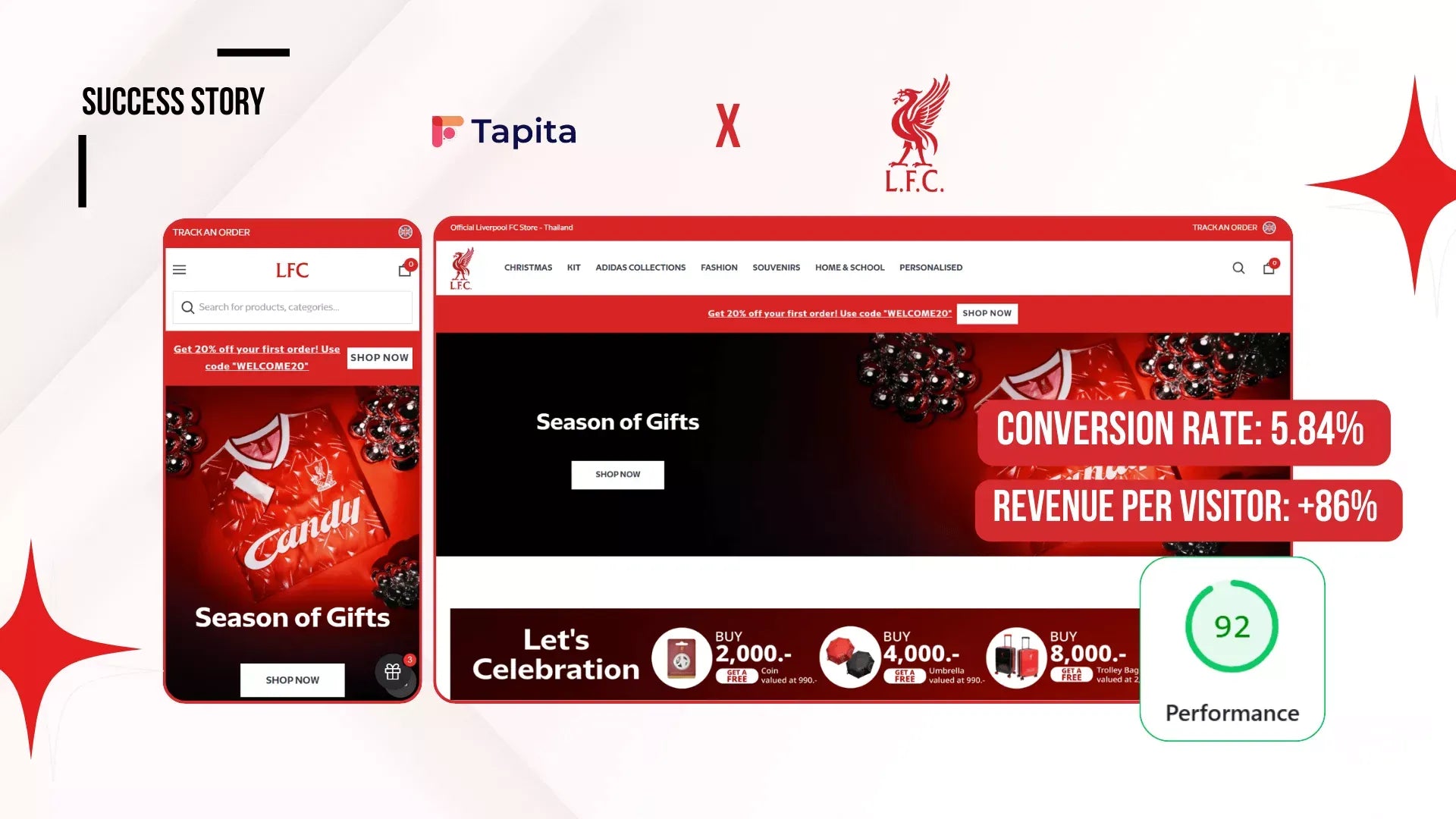
Tapita provides the essential infrastructure to compete effectively, boosting your visibility across Google search and emerging AI search engines like ChatGPT and SGE. By automating technical SEO improvements, image optimization, and Core Web Vitals enhancements, Tapita ensures your curated product selection actually gets discovered by your target audience.
For new dropshippers overwhelmed by the technical aspects of store building, solutions like Tapita remove barriers between your product ideas and a professional online presence.
Dropshipping Examples to Inspire Your Business
Learning from successful dropshipping stores reveals strategies worth emulating and helps you visualize what's possible. While each business operates differently, patterns emerge in how they've overcome common dropshipping challenges.
Notebook Therapy
This jewelry brand, originating from Germany, uses dropshipping and print-on-demand alongside owned inventory to maintain flexibility while building a distinctive Hawaiian-inspired brand identity.
What you can learn: Hybrid models work. Combining dropshipping with owned inventory, print-on-demand, or local suppliers can capture dropshipping's benefits while addressing limitations around branding and shipping times.

Fashion Nova
Fashion Nova has become a billion-dollar fashion brand using a hybrid model that includes significant dropshipping operations. By leveraging social media marketing aggressively—particularly Instagram influencer partnerships—they've built a brand that transcends their fulfillment method.
What you can learn: Fashion Nova proves that marketing innovation and brand building can overcome dropshipping's branding limitations. Their speed-to-market approach, bringing trending styles to customers faster than traditional retailers, demonstrates how dropshipping's flexibility becomes a competitive advantage.

Epic Loot Shop
This gaming-focused store has carved a profitable niche selling merchandise to gaming enthusiasts. By targeting a passionate audience with deep product knowledge, they've built loyalty despite selling products available elsewhere.
What you can learn: Niche focus reduces competition intensity. When you become the go-to store for a specific community, you compete less on price and more on understanding your customer's culture and needs.

PURELEI
This jewelry brand, originating from Germany, uses dropshipping and print-on-demand alongside owned inventory to maintain flexibility while building a distinctive Hawaiian-inspired brand identity.
What you can learn: Hybrid models work. Combining dropshipping with owned inventory, print-on-demand, or local suppliers can capture dropshipping's benefits while addressing limitations around branding and shipping times.

Dropshipping FAQs
Common questions deserve clear answers. Here's what aspiring dropshippers most often ask.
Is Dropshipping Worth It?
Dropshipping remains worth considering for entrepreneurs who approach it with realistic expectations. While the market has matured since the early 2010s gold rush, profitability is absolutely achievable. Research from Shopify indicates that approximately 10-20% of dropshipping stores become consistently profitable, with success correlating strongly to niche selection, marketing execution, and operational excellence. For those willing to treat dropshipping as a legitimate business requiring effort rather than a passive income hack, the model offers genuine opportunity with limited downside risk.
Is Dropshipping Legal?
Dropshipping is completely legal in virtually all jurisdictions. You're simply a retailer using a third-party fulfillment partner—a business arrangement with decades of history predating e-commerce. However, legal considerations still apply. You must comply with consumer protection laws regarding returns, warranties, and accurate product representation. You're responsible for product safety regulations applicable in your customers' countries. Tax obligations, including sales tax collection where required, remain your responsibility. Operating legally is straightforward—you just need awareness of standard retail regulations.
How Profitable is Dropshipping?
Profitability varies enormously based on niche, marketing efficiency, and operational skill. Industry data suggests average profit margins between 15-30%, with successful stores generating anywhere from $1,000 to $100,000+ monthly in profit. A realistic expectation for a committed first-year dropshipper working part-time is $500-$2,000 monthly profit after 6-12 months of optimization. Full-time operators with proven products and marketing systems can exceed $10,000 monthly, though this typically requires 12-24 months of experience and reinvestment.
How to Get Started Dropshipping?
Getting started involves a sequence of foundational steps. First, research and select a niche based on personal interest, market demand, and competition levels. Second, identify and vet reliable suppliers using platforms like AliExpress, Spocket, or DSers. Third, set up your Shopify store with a speed-optimized theme and essential apps. Fourth, import products and craft compelling descriptions that differentiate your listings. Fifth, configure payment processing and shipping settings. Sixth, develop a marketing strategy—typically beginning with paid social media advertising or content marketing. Finally, launch, analyze performance data, and iterate continuously.
Is Dropshipping Hard for Beginners?
Dropshipping has a moderate learning curve. The fundamentals—setting up a store, listing products, processing orders—are straightforward and learnable within days. The challenging aspects are marketing effectively in competitive spaces, building systems that scale without overwhelming you, and maintaining profitability while accounting for all costs. Most beginners find the first 3-6 months challenging as they develop intuition for product selection and marketing. Persistence matters more than prior experience—dropshipping rewards those who treat early failures as education.
How Much Do I Need to Invest to Start Dropshipping?
Minimum viable investment for a Shopify dropshipping store ranges from $150-$500, covering a Shopify subscription for one to two months at $29-$79 monthly, a domain name at $10-$15 annually, essential apps at $0-$50 monthly (many offer free tiers), and initial marketing spend at $100-$300. However, the more realistic budget for testing until profitability is $1,000-$3,000, providing sufficient runway to experiment with products and marketing without premature pressure. Undercapitalization is a common failure point—starting with more runway increases your odds of survival through the learning curve.
How Do Dropshippers Make Money?
Dropshippers profit from the margin between retail price (what customers pay) and costs (supplier price, shipping, marketing, platform fees, and transaction processing). For example, you might sell a product at $39.99 that costs $12 from your supplier plus $3 shipping. After Shopify's fees of approximately $1.20, payment processing fees of around $1.20, and average customer acquisition cost of $8-15, your profit ranges from $7.59 to $14.59 per sale. Profitability requires either high volume at lower margins, higher-priced products with larger absolute margins, or exceptional marketing efficiency that reduces customer acquisition costs. Successful dropshippers obsess over these unit economics, continually optimizing each component.
Starting your dropshipping journey on Shopify represents an accessible path into entrepreneurship, but success requires more than simply listing products and waiting for sales. Focus on selecting vetted suppliers who deliver consistently, building a store that loads quickly and converts visitors, and developing marketing skills that attract your ideal customers.
The entrepreneurs who thrive in dropshipping treat it as a real business requiring real effort—learning continuously, adapting to market changes, and persistently optimizing their operations. With the global dropshipping market projected for substantial growth through 2033, the opportunity remains significant for those willing to approach it strategically.
Your next step? Choose your niche, research suppliers, and take action. The perfect time to start was yesterday; the second-best time is today.